

Dynamics 365 Finance and Operations (D365FO) is a highly customisable ERP system. To ensure that custom functionalities are delivered to a high standard and meet both quality and time expectations, it is essential to utilise Azure DevOps for Continuous Integration and Continuous Delivery (CI/CD).
By implementing CI/CD, organisations can dramatically reduce development cycles and shorten deployment timeframes. This allows for faster feature rollouts and more efficient issue resolution, providing a significant competitive advantage.
What is CI/CD and Why Does it Matter?
CI/CD stands for Continuous Integration and Continuous Delivery. In the context of D365FO, it is a set of practices that enables businesses to release new functionalities reliably and frequently.
The benefits of a robust CI/CD pipeline can be categorised into four key areas:
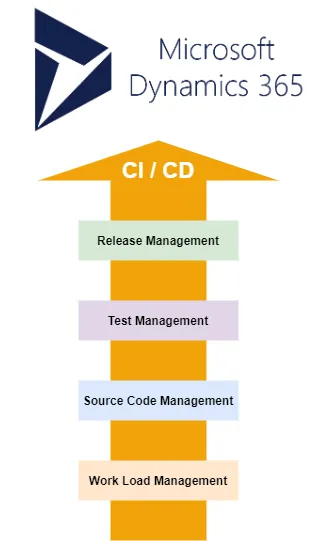
- Workload Management: Provides full visibility of development progress to both the technical team and business stakeholders. Agile methodologies like Scrum and Kanban are highly effective here.
- Source Code Management: Tracks every code change over time. This allows for easy reverts, detailed impact analysis, and collaborative development without code conflicts.
- Test Management: This is the foundation of successful CI/CD. Automated and comprehensive testing ensures that new features meet business requirements and do not introduce regressions.
- Release Management: Provides a controlled and repeatable process for delivering solutions to various environments, improving visibility and significantly reducing the risk of deployment failures.
Conclusion
D365FO is a powerful and flexible ERP system. When coupled with Azure DevOps, organisations can ensure high-quality delivery, achieve greater customer satisfaction, and provide continuous value to the business with minimal operational impact. I highly recommend adopting Azure DevOps for any organisation implementing D365FO.