

Dynamics 365 Finance and Operations (D365FO) is Microsoft’s flagship cloud ERP solution, designed to unify global financials and operations. In addition to its core functional modules, D365FO provides powerful analytical insights by embedding Power BI content directly into the application.
Complemented by standard operational SSRS reports, D365FO offers excellent out-of-the-box (OOTB) BI content. It also provides a flexible development framework – aggregate measurement – which allows developers to enhance and customise existing content to meet specific business needs.
Accessing Analytical Workspaces
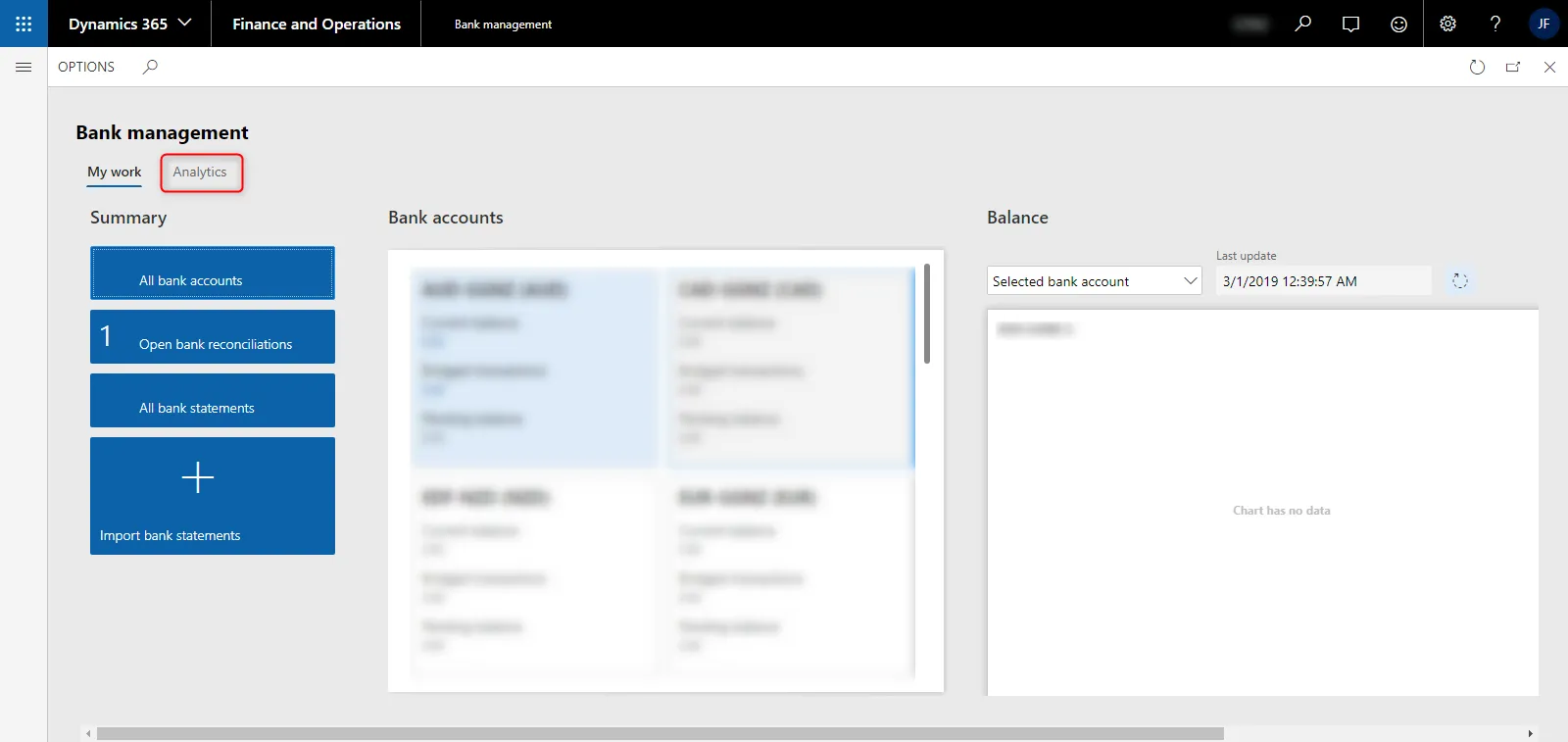
Analytical workspaces are integrated into D365FO functional workspaces. They typically appear as an “Analytics” tab alongside the “My work” tab. This integration renders Power BI content natively within the ERP system, providing a seamless and unified user experience.
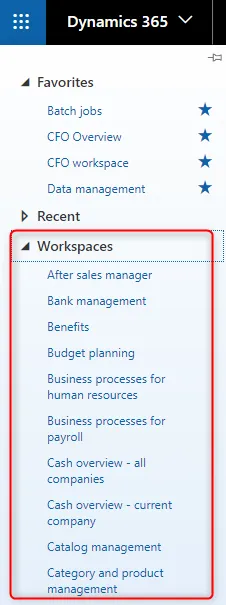
The screenshot below shows the functional “Workspaces” section on the Navigation pane.
For example, the Bank management workspace contains an analytical tab with a dedicated Power BI report.
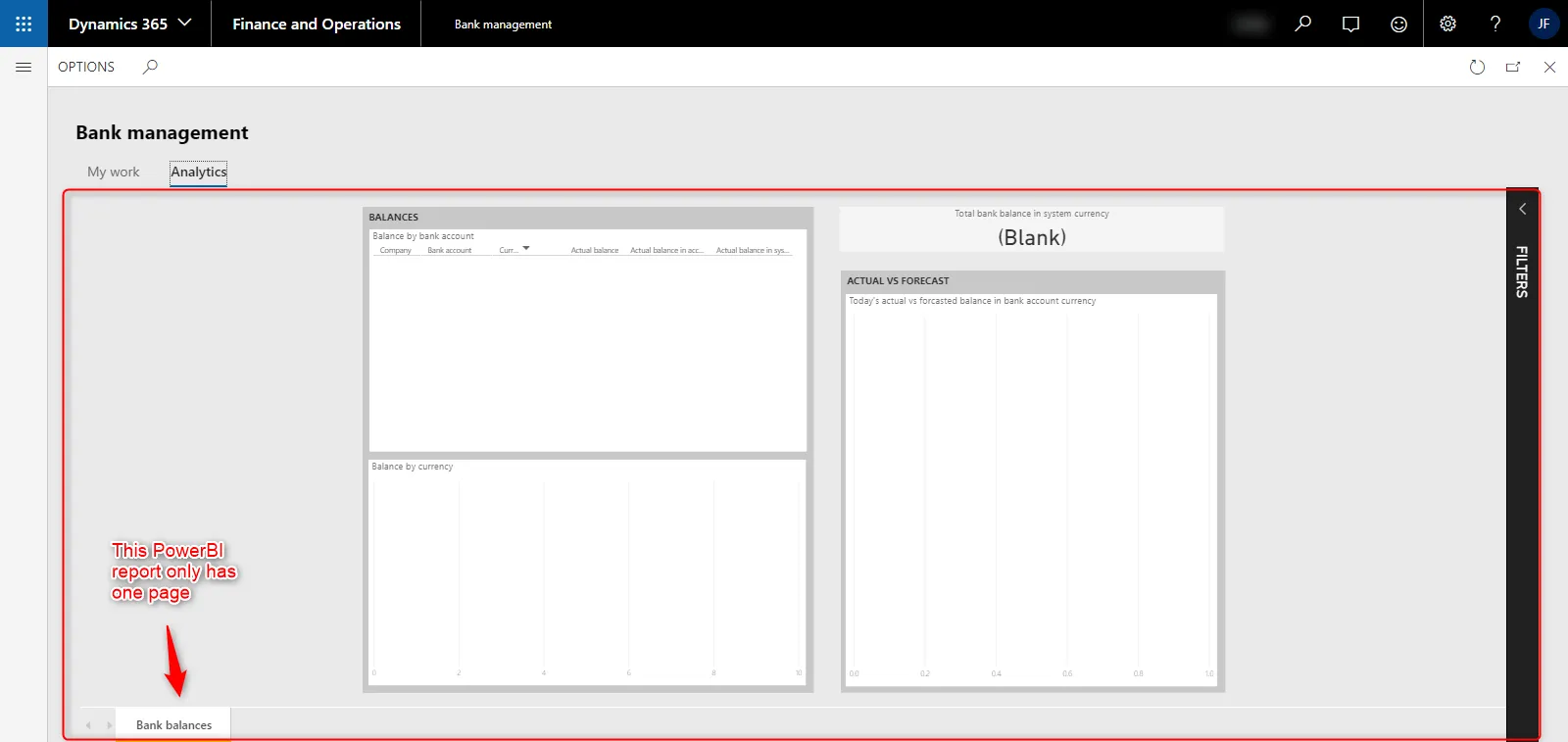
This “Analytics” tab renders the Power BI content directly, as shown in the highlighted region below.
Below are a few examples of different analytical workspaces available in D365FO.
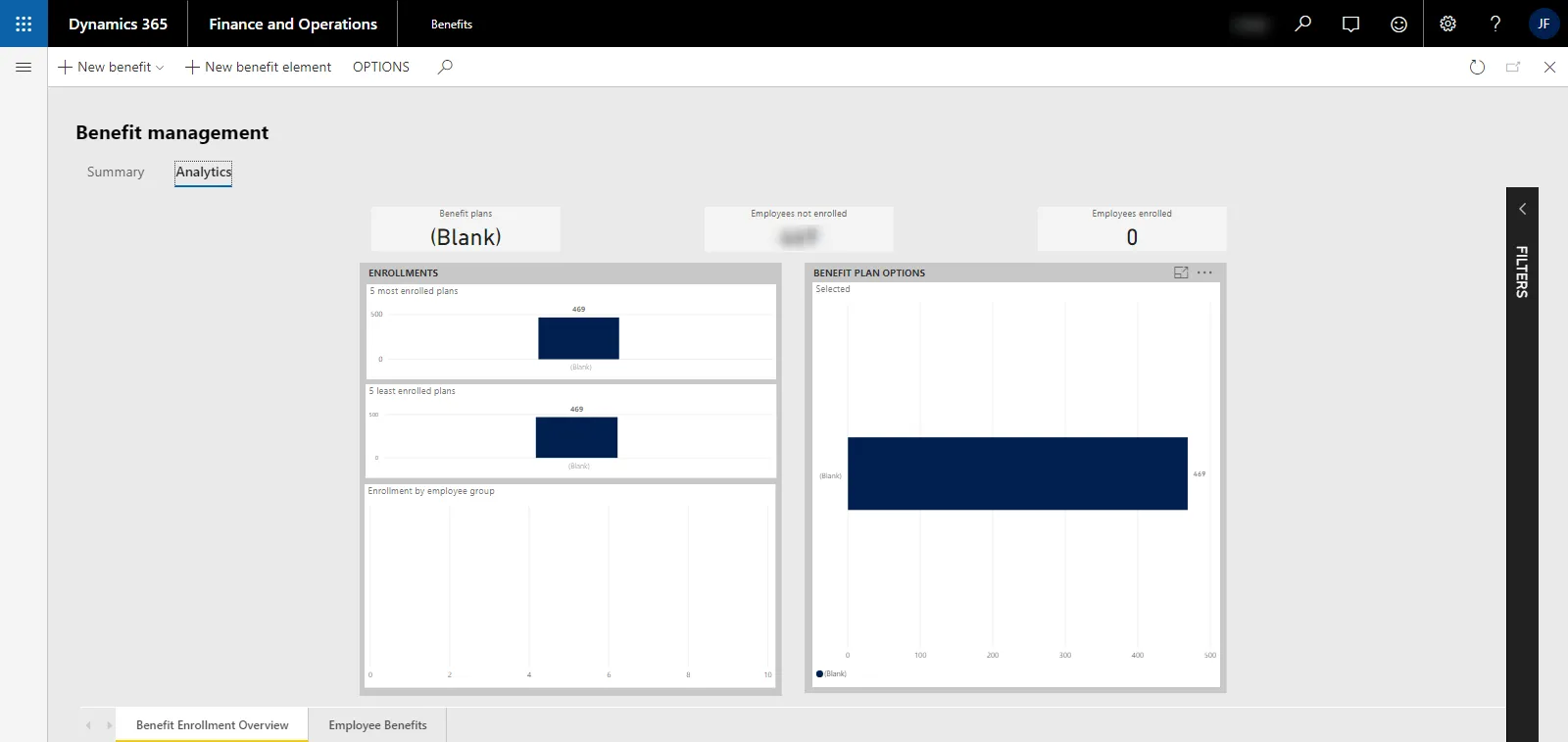
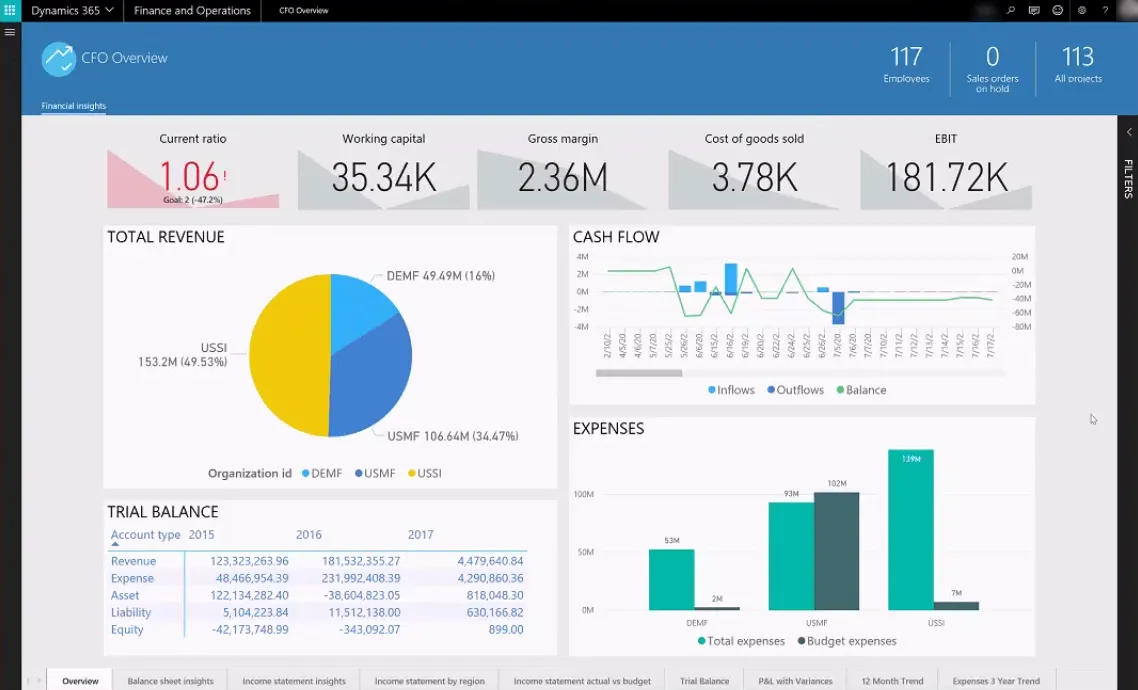
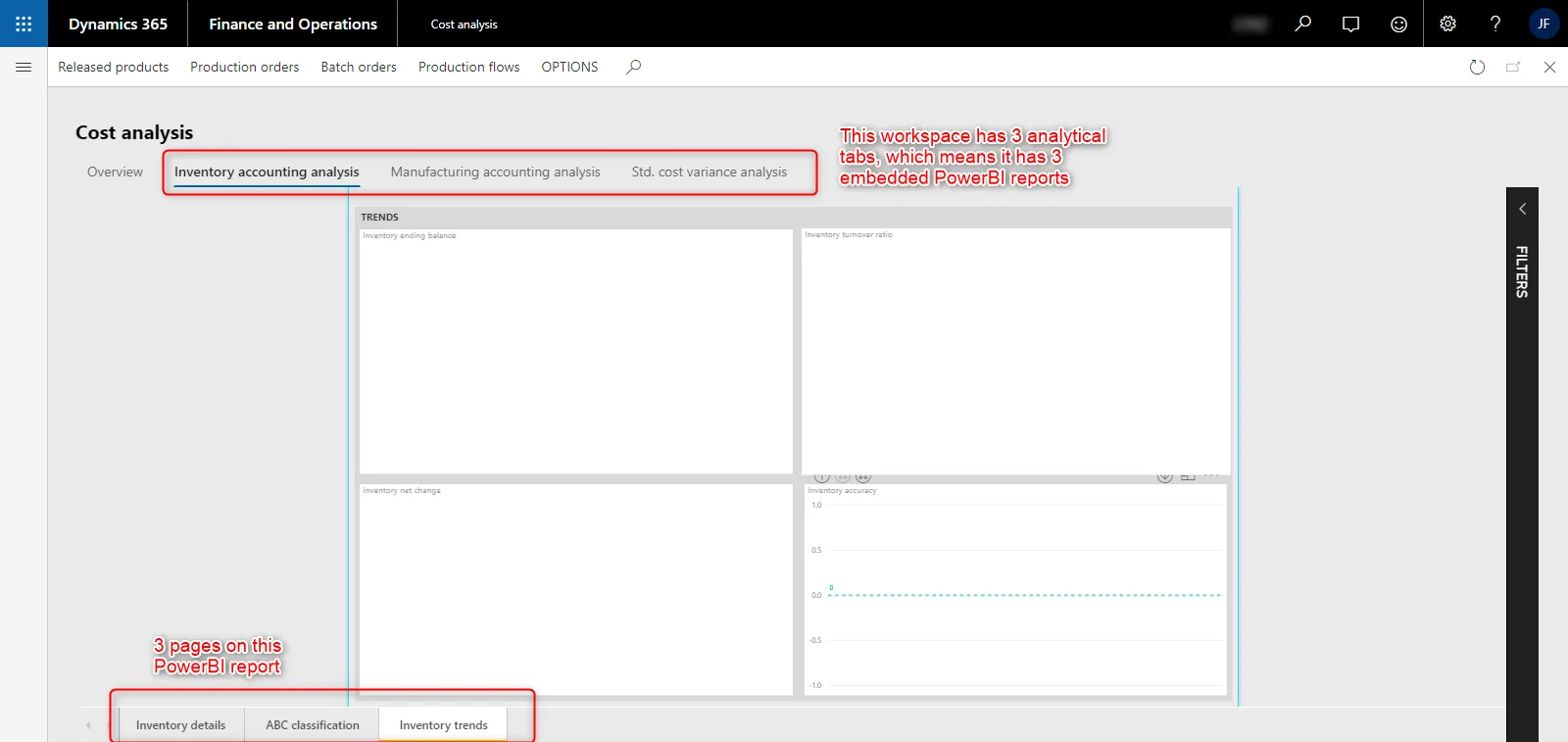
While most Power BI content appears on a single “Analytics” tab, some workspaces feature multiple analytical views. These will appear as separate tabs with descriptive names. The “Cost analysis” workspace is a prime example of this.
Key Out-of-the-Box Power BI Content
There is a vast amount of Power BI content available OOTB, covering critical business areas such as:
- Actual vs Budget: Monitor financial performance against targets.
- Cash Overview: Gain real-time visibility into your cash position.
- Financial Performance: Deep dive into P&L and balance sheet metrics.
- Purchase Spend Analysis: Optimise procurement by analysing spending patterns.
- Sales and Profitability Performance: Track sales trends and margin health.
- Warehouse Performance: Monitor inventory levels and operational efficiency.
Conclusion
Blending analytics naturally into the day-to-day operations of the ERP system is a powerful feature. It empowers users at all levels to make fast, informed decisions based on real-time data, rather than relying on static reports or external tools. By leveraging these OOTB insights, organisations can significantly improve their operational agility and financial oversight.